
The landscape of local discovery has undergone a fundamental transformation. For over a decade, small business SEO focused primarily on maintaining a position within the "Map Pack" on Google. However, as we navigate 2026, the traditional search results page has been replaced by a more complex, AI-mediated ecosystem. Modern consumers no longer merely browse a list of links; they interact with AI assistants, Gemini-powered overviews, and CarPlay-integrated suggestions that curate and recommend businesses based on deep contextual understanding.
To remain competitive, your organization must transition from a strategy of "ranking" to a strategy of "being chosen." This evolution requires a proactive approach to how AI models perceive, categorize, and ultimately recommend your brand. The following framework outlines the essential pillars for securing your presence in the AI local pack and leveraging these innovations for sustainable lead generation.
The Paradigm Shift: From Search Results to AI Recommendations
In the previous era of search, a business could succeed by optimizing for specific keywords and acquiring a high volume of backlinks. In 2026, AI models such as Google Gemini, ChatGPT, and Apple Intelligence act as sophisticated research assistants. These systems aggregate data from across the web to provide users with a single, authoritative recommendation or a curated "Pack" of top-tier options.
This shift means that small business SEO is no longer just about your website. It is about your brand's overall "entity" status. AI systems prioritize entities that demonstrate the highest levels of accuracy, reliability, and local relevance. If your data is inconsistent or your reputation is stagnant, you risk being filtered out of the AI conversation entirely.
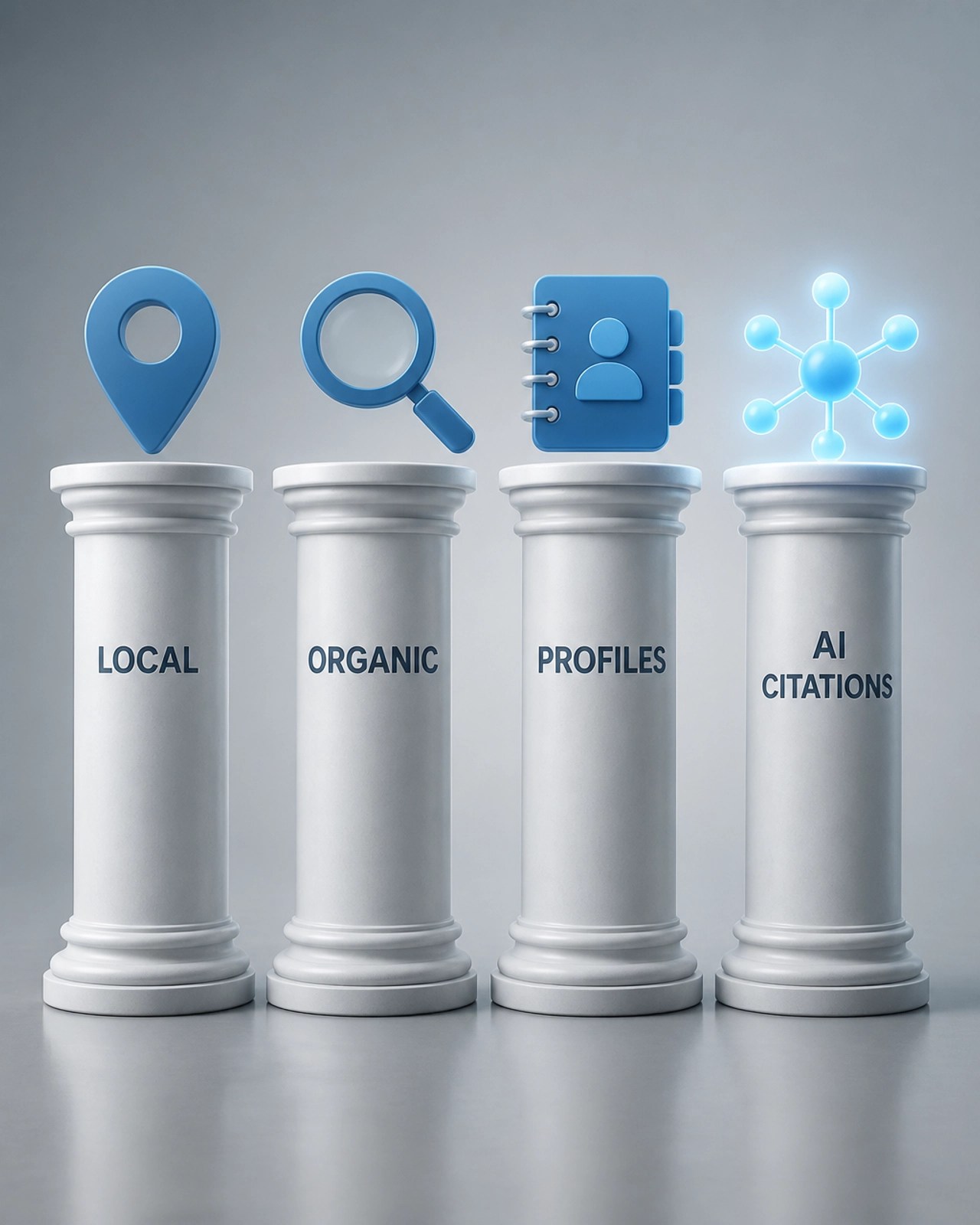
The Four Surfaces Framework for 2026
To achieve comprehensive visibility, businesses must optimize across four distinct search surfaces. Each surface plays a critical role in how AI models validate your business's legitimacy and prominence.
1. The Google Local Pack and Maps
Despite the rise of AI, the Google Business Profile (GBP) remains the foundational source of local data. AI systems use your GBP to verify your physical location, service hours, and service categories. Ensuring your profile is fully optimized is a non-negotiable milestone for any local strategy. You can leverage our specialized Google Business Management services to ensure your profile remains a trusted data source for AI crawlers.
2. Traditional Organic Visibility
While AI overviews capture a significant share of attention, traditional organic rankings still serve as the "proof" that AI models use to cite their sources. A strong organic presence on your own domain signals to AI that your business is an authority in your niche.
3. Third-Party Profiles and Directories
AI models are trained on massive datasets that include platforms like Yelp, Industry-specific directories, and local chamber of commerce sites. If your business information is missing or incorrect on these high-authority surfaces, it creates a "data gap" that can mitigate your chances of appearing in AI-driven recommendations.
4. AI Citations
This is the newest and most critical surface. An AI citation occurs when an assistant like Perplexity or Gemini mentions your business and provides a direct link to your website as a source for its answer. Securing these citations is the gold standard for lead generation for businesses in the current year.
Tactical Execution: Strengthening Your Digital Entity
To win the AI Local Pack, you must provide the "food" that AI models crave: structured, accurate, and authoritative data.
Establish Absolute Data Integrity
Inconsistency is the primary reason businesses lose visibility. If your Name, Address, and Phone number (NAP) vary across the web, AI models perceive your business as a high-risk recommendation. You must perform a comprehensive audit to ensure that every mention of your brand: from your website footer to a minor local directory: is identical.
Leverage Structured Data and Schema
AI systems communicate through structured data. By implementing advanced Schema.org markup (such as LocalBusiness, Service, and FAQ schema), you translate your website’s content into a language that AI can ingest with 100% accuracy. This technical layer is essential for helping AI understand the specific services you offer and the geographic areas you serve. Our website development team specializes in integrating these deep technical signals into high-converting site architectures.
Cultivate a "Reputation Engine"
Reviews have evolved beyond simple social proof; they are now a primary dataset for AI sentiment analysis. AI models scan the text of your reviews to understand what customers actually value about your business. A business with 50 reviews mentioning "fast emergency response" is more likely to be recommended for a query about "urgent repair" than a business with 100 generic reviews. Implementing a robust reputation management strategy is vital to feeding positive sentiment data into the AI ecosystem.
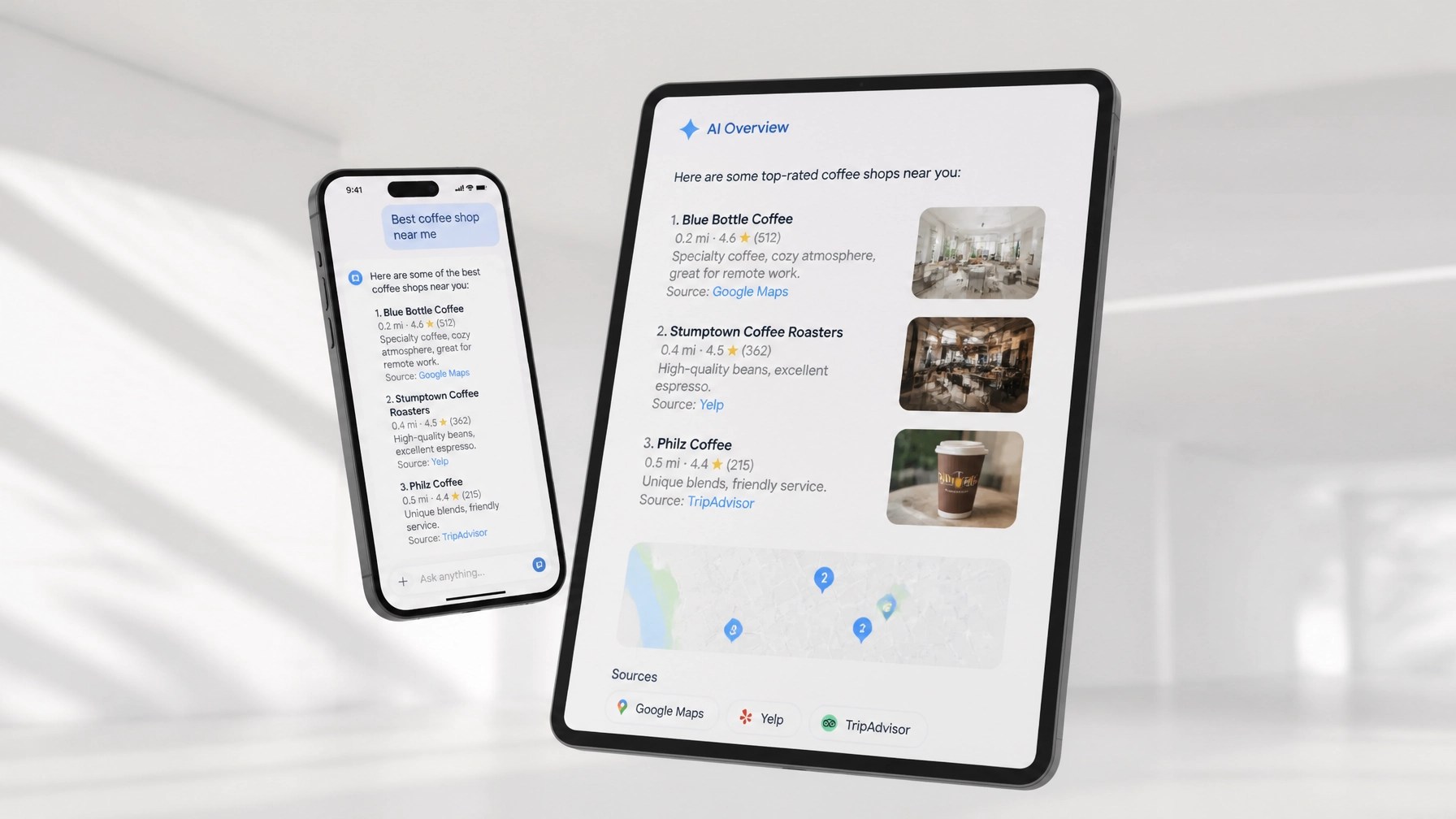
The AI Citation Playbook: How to Be Quoted
Appearing in an AI response is a significant achievement, but being cited as the source is what drives traffic. To increase your citation frequency, follow these guidelines:
- Produce Fact-Rich Content: AI models prefer content that provides concrete answers, statistics, and definitions. Instead of vague marketing copy, publish detailed guides that answer specific local questions (e.g., "The Cost of HVAC Installation in [Your City] 2026").
- Utilize Clear Formatting: Use bold subheadings, bulleted lists, and concise paragraphs. This structure allows AI models to "scrape" and "chunk" your information more efficiently.
- Optimize for Intent: Focus on "long-tail" conversational queries. Users are asking AI assistants complex questions like, "Which local plumber offers 24/7 service and has the best warranty for water heater replacements?" Your content must explicitly address these multi-layered intents.
Converting Visibility into Leads
Visibility without conversion is a wasted investment. As AI becomes the gatekeeper of information, your website and profiles must be optimized for immediate action.
Ensure that your Google Business Profile and your mobile-optimized landing pages feature prominent, trackable call-to-action buttons. Whether it is a "Click-to-Call" feature or a direct booking integration, the path from an AI recommendation to a confirmed lead must be frictionless. For a deeper look at why these strategies are essential now, read our analysis on why small business SEO matters in 2026.
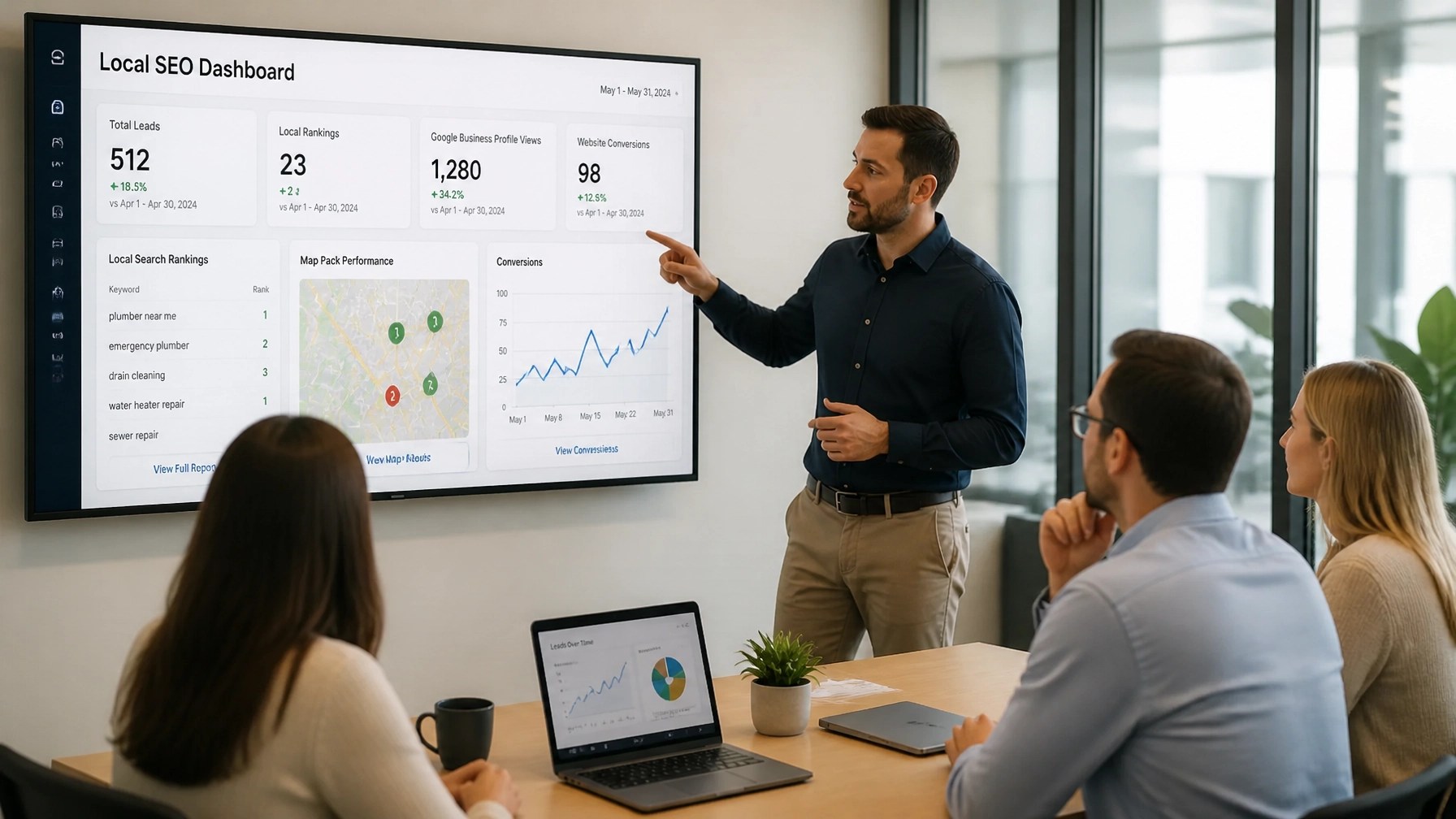
Summary of the 2026 Local Framework
The transition to AI-driven local search is not a challenge to be feared, but an opportunity to be seized. By focusing on entity integrity, structured data, and authoritative content, your business can secure its place at the top of the AI Local Pack.
- Audit your NAP consistency across all digital surfaces.
- Implement comprehensive Schema markup to speak the language of AI.
- Build a reputation engine that focuses on specific customer sentiment.
- Create fact-rich, informational content that answers complex user intents.
At Integrated Mobile Marketing, we are dedicated to navigating these technical complexities for our clients. By staying proactive and leveraging the latest in AI-ready web design and digital marketing, we ensure that your business is not just found( it is chosen.)