
A GS1 2D code can do more than identify a product at checkout. When implemented as a GS1 Digital Link, it can connect the physical product to useful online information, and give your business a direct, measurable path to reviews, reorders, offers, and customer relationships.
In our companion article, After 50 Years, the Barcode Is Changing: What GS1's 2D Code Standard Means for Your Business, we introduced the standard and the Sunrise 2027 milestone. This guide focuses on the next step: what to build around the code so a scan is useful to customers and valuable to your business.
1. Make the Digital Link resolve to a destination you control
A GS1 Digital Link URI connects a product’s GS1 identity, such as its Global Trade Item Number (GTIN), to online resources. The printed code can remain consistent while the destination and linked information evolve. The resolver is the routing layer; the landing page is the consumer-facing experience.
Start with a domain or subdomain your business controls and can maintain over time. The code points to that stable web address, which can then direct a shopper to the relevant product page or other resource. GS1 describes options ranging from direct redirection to using a resolver that can direct different requests to different resources. Review the GS1 Digital Link quick start guide and GS1-Conformant Resolver Standard before choosing an approach.
For a single product line, directing scans to a carefully designed product page may be sufficient. A larger catalog may benefit from a resolver or link management layer that routes to different destinations, such as product information, support, traceability details, or a retailer page.
Plan for continuity: Avoid encoding a temporary campaign URL or a destination you do not control. Keep the product identity stable, and make sure your team can update, test, and monitor the routing over time. A code that resolves to an expired offer or broken page undermines customer confidence.
2. Give the scan a clear next step
A scan is an expression of interest, not a guaranteed purchase. Your landing page should answer the customer’s immediate question and make the next useful action obvious. Depending on the product and context, that may mean:
- Product details: Show the name, images, key features, ingredients or specifications, and usage instructions.
- Reviews and reassurance: Link to authentic customer feedback, warranties, certifications, or support information.
- Purchase or reorder: Make it easy to buy directly, find a nearby retailer, or repeat a previous purchase.
- Offers and loyalty: Present a relevant promotion or invite customers to join a loyalty program without making basic product information conditional on signup.
Do not crowd every possibility above the fold. Lead with the most relevant information and one prominent action. Additional options can follow lower on the page.
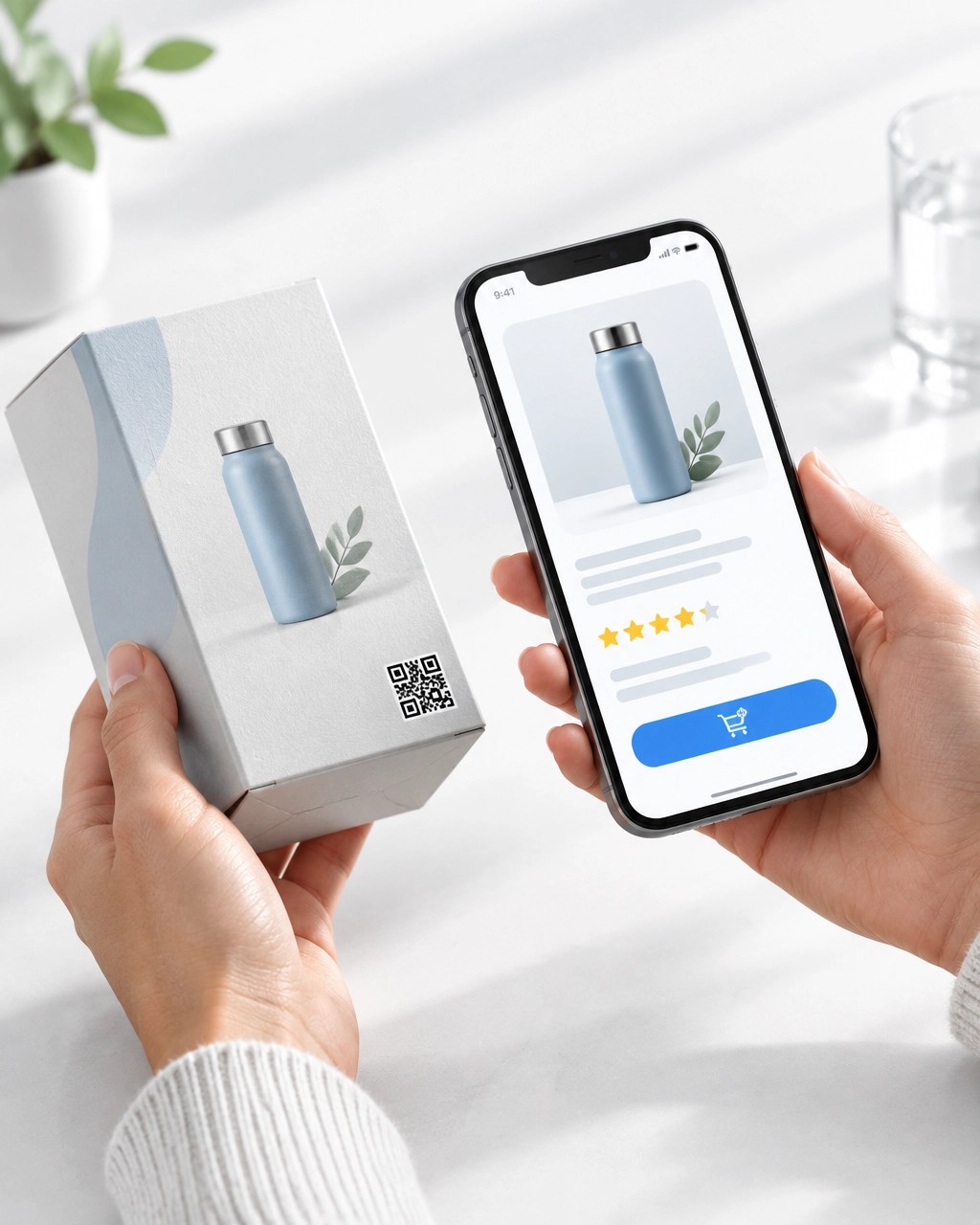
3. Design for the moment of the scan
A scan usually begins on a smartphone, often with limited time and attention. The page should load quickly, display essential information without unnecessary scrolling, and make its buttons easy to tap. Use concise copy, readable type, optimized images, and a streamlined checkout or reorder path.
Do not send every scan to your homepage. A shopper scanning one specific product should arrive at information about that product, not be asked to search your catalog again. Avoid pop-ups that obscure the page, forced account creation, and forms that request more information than the next step requires.
Test the full journey on real devices: scan the code, wait for the redirect, check that the correct item appears, and complete the intended action. Include common conditions such as a weak connection, a logged-out customer, an unavailable product, or an offer that has expired. Provide a sensible fallback when a product cannot be purchased directly.
These are practical website conversion optimization principles: reduce friction, make the value clear, and match the action to customer intent. For further guidance, see our article on website conversion optimization.
4. Measure scans through to business outcomes
A scan count tells you that someone reached the digital journey; it does not tell you whether the experience produced a result. Measure activity across the whole path: from a code scan to a purchase, reorder, review, or signup.
At minimum, agree on a small set of measurable events:
- Scan or resolver visit: Record visits arriving through the GS1 Digital Link route.
- Engagement: Track meaningful actions, such as viewing reviews, opening instructions, or selecting a retailer.
- Conversion: Measure completed orders, loyalty signups, or other defined outcomes.
- Quality and drop-off: Compare mobile load performance, exits, and errors at key steps.
Use campaign parameters or analytics events where appropriate, and distinguish code-driven visits from other product-page traffic. A resolver or redirect layer may provide scan information such as time, device, or location, depending on its setup and provider. Coordinate with your analytics and privacy teams on consent, retention, and data use; do not place personal information in the Digital Link URI.
Start with a baseline, then compare outcomes by product, placement, and offer. If scans are strong but purchases are weak, investigate page speed, product availability, offer relevance, or checkout friction. If shoppers reach reviews but do not reorder, test whether the reorder path is clear and the product is eligible.
5. Make product information useful to both people and machines
The code provides a route to information; your site still needs accessible, consistent product content. Give each product a crawlable page with clear text, accurate product details, and links that search engines can follow. Keep important content available on mobile and ensure that customers do not have to scan another code or sign in to understand the basics.
For ecommerce product pages, structured data can help search engines interpret details such as product name, price, availability, and reviews. Google’s Product structured data guidance explains how to implement it, while its merchant listing documentation covers pages where customers can buy directly. Structured data should match the visible page and current product information. It can support eligibility for search features, but it does not guarantee a particular display or placement.
This is also a foundation for machine-readability in AI-influenced search. Google says its AI search features have no separate technical eligibility requirements beyond the usual Search requirements: pages must be indexed and eligible to appear with a snippet. Useful, accessible content and accurate structured data can help systems interpret your products, but no markup guarantees inclusion. See Google’s guidance on AI features and your website.
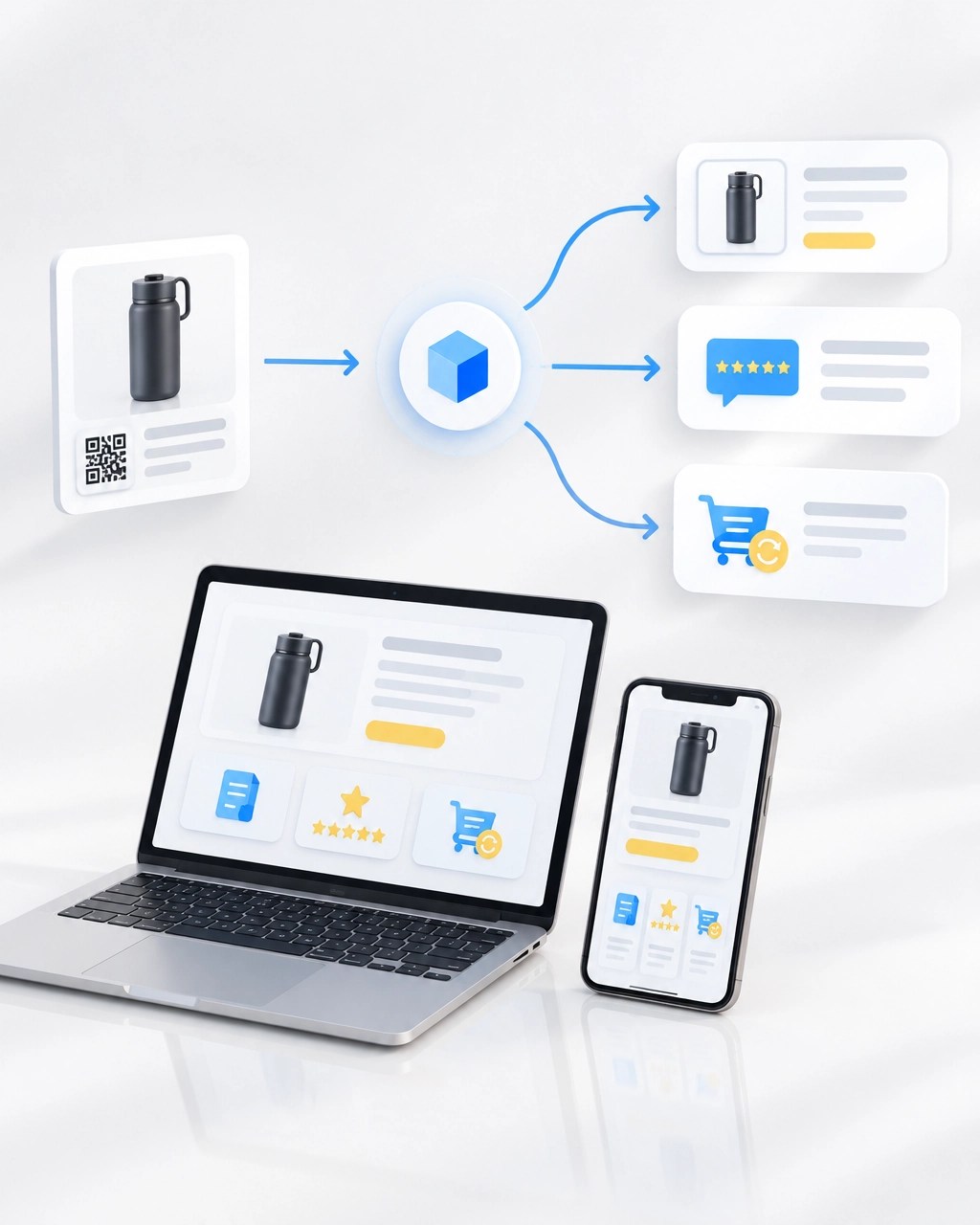
For WooCommerce merchants, that may mean checking product data, schema output, variant URLs, and how custom landing pages connect to the catalog. Experienced WooCommerce experts can help ensure that the scan journey works with your existing store rather than creating a disconnected microsite. Where the routing, analytics, or product experience requires more than an off-the-shelf setup, custom WordPress development can provide a tailored solution. Explore our website development services.
GS1 2D code readiness checklist
Before placing a code on packaging or activating a campaign, confirm that you can:
- Verify the product’s GTIN and Digital Link details with the appropriate GS1 resources.
- Use a stable domain or subdomain that your business controls.
- Choose a direct redirect or resolver approach that fits your product range and future needs.
- Build a mobile-first, product-specific destination with a clear primary action.
- Test the printed code, redirect, content, and purchase path on multiple devices.
- Add accurate, visible product information and matching structured data where appropriate.
- Define scan, engagement, and conversion events, then confirm analytics are recording them.
- Establish ownership for updating offers, destinations, and product details.
- Review privacy practices and make a plan to monitor broken links and page performance.
Sunrise 2027 is a transition milestone, not a reason to treat implementation as a last-minute printing task. A GS1 2D code can serve retail identification and become a useful customer touchpoint, but only when its routing, landing experience, measurement, and product data work together.
Start with one product or product family, test the complete scan-to-action journey, and improve it using real behavior. With a stable link and a focused mobile experience, you can turn a product code into an ongoing conversion channel, and build a stronger digital connection with customers after the package leaves the shelf.