
For more than 50 years, the familiar linear barcode has helped retailers identify products, retrieve prices, and complete transactions. That system is now entering a significant transition.
GS1’s Sunrise 2027 initiative is encouraging the retail industry to prepare for a future in which point-of-sale systems can scan and process 2D barcodes, including QR codes and GS1 DataMatrix codes. The goal is for retail checkout systems globally to support these codes by the end of 2027.
This is not a law, and it is not an immediate requirement for every brand to remove its UPC or EAN barcode. For most businesses, Sunrise 2027 is better understood as a strategic milestone. Brands are encouraged to begin adding a 2D barcode alongside their existing linear barcode, while retailers upgrade their scanners and software.
The opportunity extends beyond faster checkout. A single 2D code can connect a physical product to product information, recalls, promotions, loyalty programs, sustainability details, and other digital experiences. It is a practical bridge between packaging and the web.
What Is GS1 Sunrise 2027?
GS1 Sunrise 2027 is a global industry initiative coordinated by GS1, the organization that develops standards for identifying products and sharing information throughout the supply chain.
By the end of 2027, the initiative aims for retail point-of-sale systems to be capable of:
- Scanning 2D barcodes such as QR codes and GS1 DataMatrix.
- Extracting at least the product’s GTIN, or Global Trade Item Number.
- Processing the encoded product data through updated hardware and software.
- Continuing to support traditional UPC and EAN barcodes during the transition.
Retailers will generally need image-based scanners rather than older laser scanners. They will also need software capable of interpreting the data contained within a 2D code, rather than simply recognizing a visual pattern.
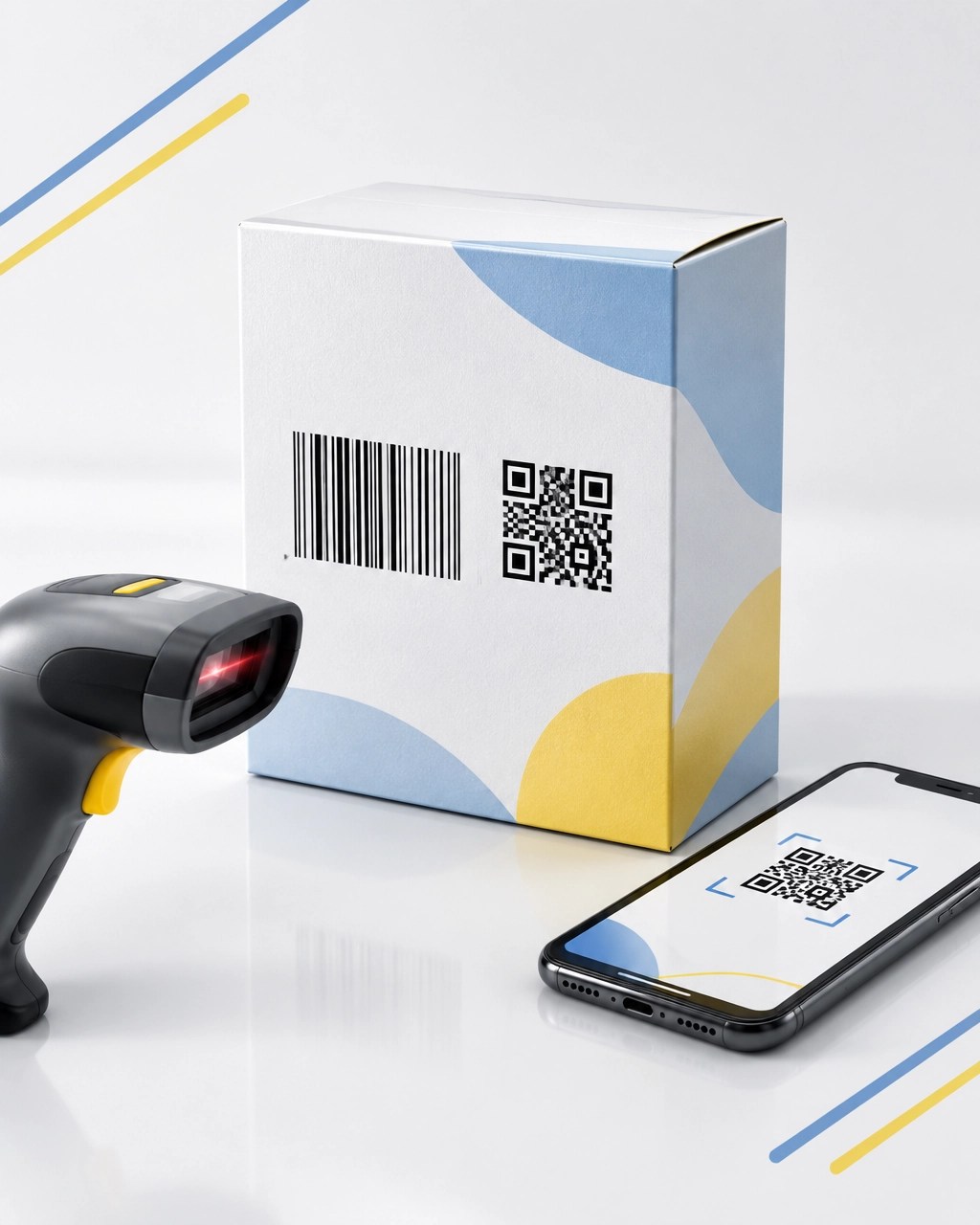
For brands, the immediate practical implication is dual marking: placing the traditional linear barcode and a compatible 2D barcode on the same product package. The existing UPC or EAN remains important because not every retail environment will transition at the same pace.
GS1’s Sunrise 2027 guidance describes this as a gradual “crawl, walk, run” process rather than a single overnight conversion.
Why the Linear Barcode Is Changing
The traditional barcode is highly effective at identifying a product, but it stores a relatively limited amount of information. In many retail environments, the barcode connects a product identifier to a price lookup in the retailer’s system.
A 2D code can hold substantially more information in a smaller space. Depending on how it is configured, it may support:
- Product identification through a GTIN
- Lot or batch information
- Serial numbers
- Expiration dates
- Recall and safety information
- Product instructions
- Ingredient or allergen details
- Sustainability information
- Promotions and loyalty experiences
- Links to brand-controlled web content
This distinction matters because modern customers expect more information before and after a purchase. GS1 US reports that 79% of surveyed consumers are more likely to purchase products with a scannable QR code that provides additional product information. The same research found that 77% consider product information important when making a purchase.
A barcode is no longer only a checkout tool. It can become an access point to the customer relationship.
GS1 Digital Link: Powerful, but Optional
One of the most important points for businesses is that GS1 Digital Link is optional.
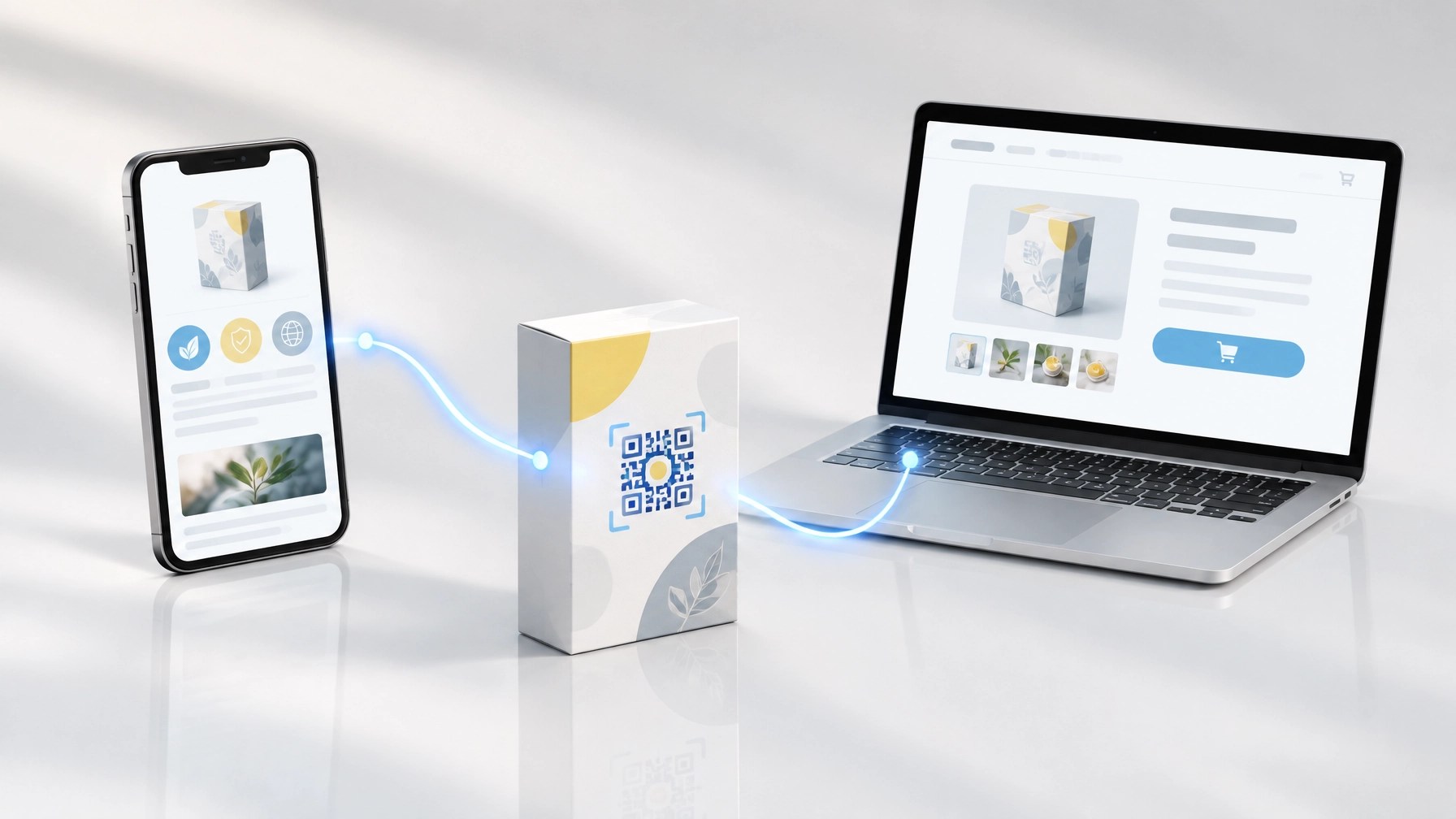
GS1 Digital Link provides a standardized way to represent a product’s identity as a web-resolvable URL. In practical terms, a QR code can identify a product and direct a consumer, retailer, warehouse employee, or software system to relevant online information.
A Digital Link-enabled experience could direct different audiences to different content:
- A consumer may see usage instructions or product information.
- A retailer may access inventory or promotional data.
- A warehouse employee may receive recall or expiration information.
- A customer service representative may view warranty or authenticity details.
However, a brand does not need to implement every Digital Link capability to begin preparing. A simple, standards-compliant 2D barcode containing the product’s GTIN can satisfy the minimum identification requirement.
That distinction helps businesses avoid unnecessary complexity. You can begin with a basic 2D code, validate the implementation, and expand the connected experience over time.
GS1 explains that Digital Link “web-enables” a barcode by connecting a product identity to online sources of information. Its Digital Link guidance for retailers provides examples involving recalls, expiration management, returns, inventory, and consumer engagement.
What Sunrise 2027 Means for Your Website
The transition also creates a website and ecommerce responsibility. If a 2D code sends a customer to a poor mobile experience, the packaging investment may not produce meaningful business value.
Your website should be prepared to support:
-
Fast mobile landing pages
Most consumers will scan a product code with a smartphone. Product pages must load quickly, remain easy to navigate, and present useful information without unnecessary friction. -
Clear product identity
Each product, size, flavor, package variation, or model should map to the correct digital destination. Confusing product URLs can undermine trust and create customer service issues. -
Accurate product data
Product claims, ingredients, instructions, availability, and sustainability information should remain current. A connected barcode makes outdated content more visible. -
Accessible content
Text, images, instructions, and videos should be usable by people with different abilities and on a range of devices. -
Measurement and attribution
Your team should determine which scans, referrals, product pages, and conversions can be measured. Analytics must distinguish barcode-driven visits from ordinary website traffic.
This is where the transition intersects with website conversion optimization. A scan is only the beginning of the customer journey. The landing page must help the visitor take the next step, whether that means learning more, buying again, contacting support, registering a product, or joining a loyalty program.
For WooCommerce stores, this may involve connecting product identifiers to product variations, inventory systems, customer accounts, and post-purchase content. Businesses seeking implementation support may benefit from working with WooCommerce experts who understand both ecommerce architecture and customer experience.
The Connection to AI Search and Structured Data
The move from linear barcodes to 2D codes reflects a broader digital trend: businesses must make their information easier for machines to interpret.
Search engines, AI assistants, ecommerce platforms, inventory systems, and retail scanners all depend on structured, consistent data. A product with a clear identifier, accurate attributes, and a reliable web destination is easier for systems to understand and use.
The parallel to AI search is direct:
- Structured data helps search engines understand a webpage.
- A GTIN helps systems identify a product.
- GS1 Digital Link can connect that product identity to web-based information.
- A fast, well-organized website turns machine-readable data into a useful customer experience.
This does not mean that adding a QR code automatically improves search rankings. It means the code can support a stronger information ecosystem when it connects to accurate, accessible, and technically sound content.
Businesses already investing in custom WordPress development can treat 2D barcode readiness as part of a broader data and content strategy. Product pages, structured data, redirects, analytics, and integrations should work together rather than being developed as isolated features.
Practical GS1 2D Barcode Readiness Checklist
Use the following checklist to establish a practical starting point.
1. Inventory your product identifiers
Confirm that every relevant product and product variation has an accurate GTIN. Resolve duplicate, missing, or inconsistent identifiers before creating new codes.
2. Speak with packaging and retail partners
Ask packaging suppliers, distributors, and retail partners about their Sunrise 2027 plans. Determine whether they require dual marking, specific code placement, or testing documentation.
3. Select the appropriate 2D approach
Evaluate whether your initial implementation should use:
- A basic 2D code containing the GTIN
- A QR code using GS1 Digital Link syntax
- GS1 DataMatrix for space-constrained packaging or specialized use cases
Do not assume that every existing QR code is automatically compatible with retail point-of-sale systems.
4. Keep the UPC or EAN during the transition
Plan for dual marking. The traditional linear barcode will continue to be accepted after the 2027 milestone, and retaining it helps reduce disruption while retail systems are upgraded.
5. Build the digital destination
Create mobile-first product pages that provide useful, current information. If you use GS1 Digital Link, establish a reliable resolution and redirect strategy so destinations can evolve without reprinting packaging.
6. Test and validate the code
The encoded GTIN must match the product’s existing identifier. Print quality, contrast, quiet zones, placement, and scanning performance should be tested on the actual packaging material and production line.
GS1 guidance distinguishes between verification, which evaluates the physical quality of the symbol, and validation, which confirms that the encoded data and syntax are correct.
7. Prepare your website and ecommerce platform
Review your CMS, product database, analytics, redirects, and integrations. A WordPress or WooCommerce implementation may require custom fields, product mappings, API connections, or tailored landing page templates.
8. Establish a measurement plan
Track scans, landing-page engagement, conversions, support interactions, and repeat purchases where appropriate. These insights can help you improve both packaging and digital content.
A Practical Timeline for Businesses
Now through the remainder of 2026: Prepare and pilot
- Audit GTINs and product data.
- Identify packaging constraints.
- Select a 2D barcode format.
- Build or improve mobile product destinations.
- Test codes with manufacturing, warehouse, and retail partners.
- Confirm how scans will be measured.
During 2027: Expand and validate
- Increase the number of dual-marked products.
- Monitor retailer scanner readiness.
- Validate packaging quality at production scale.
- Add useful data such as lot, batch, or expiration information where appropriate.
- Improve consumer experiences based on scan behavior.
After the Sunrise 2027 milestone: Optimize
- Continue supporting legacy linear barcodes where required.
- Evaluate whether 2D codes can support inventory, recalls, returns, loyalty, or personalization.
- Consolidate product information across packaging, ecommerce, customer service, and retail systems.
- Review performance as retailers adopt more advanced 2D capabilities.
The Strategic Opportunity Behind the Code
Sunrise 2027 is not simply a packaging redesign. It is an opportunity to connect a physical product with a stronger digital experience.
The linear barcode helped businesses identify products efficiently for more than five decades. The next generation can help businesses identify products, communicate with customers, improve traceability, and create more useful interactions throughout the product lifecycle.
You do not need to implement every advanced capability immediately. Start by confirming your identifiers, adding a standards-compliant 2D code alongside the existing barcode, and preparing a fast, accurate digital destination.
With the right planning, GS1’s 2D standard can become more than a compliance milestone. It can support better product information, stronger customer engagement, and a more connected foundation for ecommerce, small business SEO, and long-term digital growth.