
In the digital landscape of 2026, website speed is no longer a luxury; it is a critical business metric. As search engines and user expectations evolve, the technical foundation of your online presence determines whether a visitor becomes a loyal client or a bounce statistic. For businesses leveraging the WordPress ecosystem, a fundamental decision often arises during the planning phase: should you utilize a pre-built template or invest in custom WordPress development?
While templates offer an immediate visual framework, they frequently carry a hidden technical debt known as "bloat." Conversely, custom development provides a streamlined, high-performance alternative tailored to specific business objectives. This article explores the nuanced differences between these two approaches, the measurable impact on site speed, and why the architectural integrity of your website is paramount for long-term SEO success.
The Allure and Pitfalls of "Off-the-Shelf" Templates
Pre-designed WordPress templates, particularly those found on massive marketplaces, are designed with a "one-size-fits-all" philosophy. To appeal to the widest possible audience: ranging from law firms to e-commerce boutiques: these themes often include hundreds of features, layout options, and pre-integrated plugins.
While this versatility appears beneficial at first glance, it creates significant performance bottlenecks. Most websites only require a fraction of the features included in a multipurpose theme. However, because the theme is built to support every option, it must load the underlying CSS and JavaScript for all of them, regardless of whether they are active on your site. This unnecessary code is the primary driver of "bloat."
The Economic Impact of Slow Loading Times
Research indicates that site speed has a direct correlation with revenue. For instance, a major media publisher recently reported that every additional second of load time cost them 10% of their user base. In a competitive environment, even a minor delay can mitigate the effectiveness of your digital marketing efforts and diminish your return on investment.
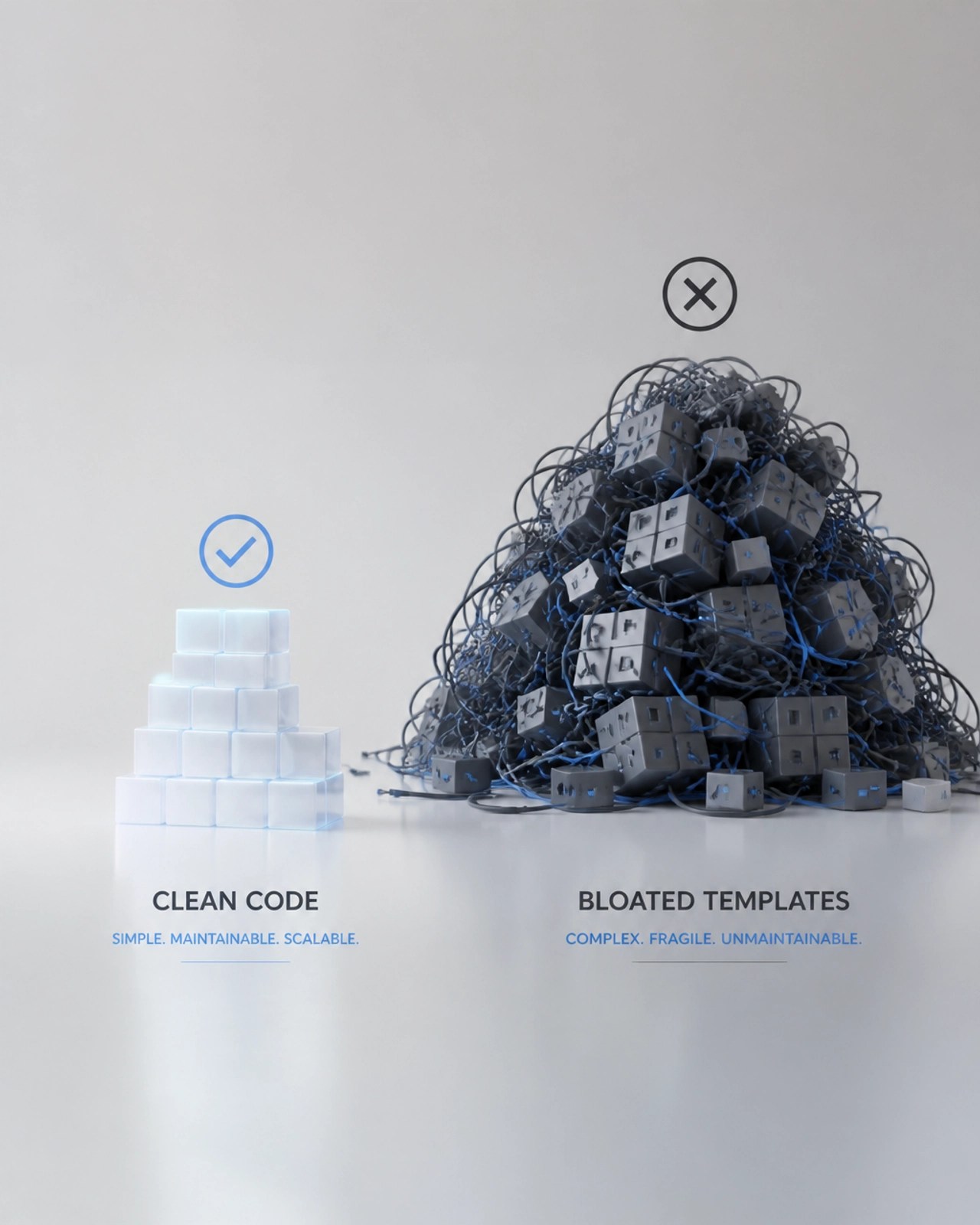
Understanding the Anatomy of Website Bloat
To understand why custom development often triumphs in performance, one must look "under the hood" at how themes are constructed. Bloat manifests in several specific ways that directly impair your Core Web Vitals:
- Excessive HTTP Requests: Each time a theme loads a separate font, script, or stylesheet, it creates a new request to the server. Bloated templates can trigger dozens of these requests, overwhelming the browser.
- Unused CSS and JavaScript: Large frameworks often load code for sliders, contact forms, or portfolios on every single page, even if that page is a simple text-based blog post.
- Heavy Database Queries: Many multipurpose themes are inefficient in how they retrieve data from the WordPress database, leading to high Server Response Times (TTFB).
- Plugin Dependency: To function correctly, many templates require the installation of several heavy third-party plugins (e.g., specific page builders or sliders), further compounding the performance degradation.
By contrast, professional website development focuses on lean architecture, ensuring that every line of code serves a specific, intentional purpose.
The Custom WordPress Development Advantage
Custom development is the process of building a WordPress theme from the ground up: or utilizing a minimalist "starter" framework: specifically for one brand. This proactive approach prioritizes speed and security from the initial line of code.
Precision and Efficiency
In a custom build, the developer only includes the scripts and styles necessary for the project. If a website does not require a carousel, no carousel code is ever loaded. This methodology results in a significantly smaller page weight, often allowing sites to load in under two seconds. In contrast, heavy marketplace templates frequently struggle to load within 5 to 6 seconds under similar conditions.
SEO Benefits and Core Web Vitals
Search engines, particularly Google, utilize Core Web Vitals (CWV) as a ranking factor. These metrics: including Largest Contentful Paint (LCP) and Cumulative Layout Shift (CLS): measure the real-world user experience of a page. Custom-built sites are inherently easier to optimize for these metrics because the developer has total control over the DOM (Document Object Model) structure.
Failing to meet these standards is a common mistake for many small businesses. For a deeper dive into common pitfalls, you may review our guide on 7 mistakes you are making with small business SEO.

Data-Driven Comparison: Templates vs. Custom
Recent industry data from 2025 and early 2026 highlights a compelling narrative regarding implementation quality. While it is a common misconception that all custom sites are fast and all templates are slow, the reality depends on the expertise of the creator.
- Custom Professional Sites: Average PageSpeed Score: 72–95+ (depending on optimization depth).
- Premium Minimalist Templates: (e.g., Astra or GeneratePress) Average PageSpeed Score: 84.
- Budget Multipurpose Templates: Average PageSpeed Score: 61.
The data suggests that while high-end, lightweight frameworks can provide excellent performance, budget templates almost universally suffer from speed issues. However, a custom-developed site by an expert team remains the "gold standard" because it removes the limitations of a third-party framework entirely, allowing for bespoke optimizations that a template simply cannot accommodate.
Strategic Considerations for Business Owners
When deciding between these two paths, consider the following strategic factors to determine the best fit for your organization:
1. Long-Term Scalability
Custom websites are generally easier to scale. As your business grows, adding new features to a lean, custom-coded site is straightforward. Conversely, adding new functionality to a bloated template often leads to "plugin conflict," where various scripts begin to interfere with one another, potentially breaking the site layout or compromising security.
2. Maintenance and Security
Bloated templates require frequent updates to remain compatible with the latest version of WordPress and various plugins. Because they contain so much unused code, they also present a larger "attack surface" for hackers. A custom-built site, having fewer dependencies, is often more secure and requires less intensive maintenance to stay operational.
3. Unique Brand Identity
A template, by definition, is used by hundreds or even thousands of other businesses. Custom development ensures that your digital presence is unique, reflecting your brand's specific aesthetic and functional requirements without compromise.

How Integrated Mobile Marketing Approaches Performance
At Integrated Mobile Marketing, we believe that a website should be your hardest-working employee. Our approach to website development emphasizes high-converting, user-friendly designs that do not sacrifice speed for aesthetics.
We leverage full-stack web technologies to ensure that your site is not just a digital brochure, but a high-performance engine designed to turn visitors into loyal clients. Whether we are building a custom WooCommerce store or a sophisticated WordPress theme, our focus remains on mitigating bloat and leveraging modern best practices in usability and design.
Conclusion: Making the Right Choice for Your Growth
The choice between custom WordPress development and a pre-built template is ultimately a choice between short-term convenience and long-term performance. While a template may offer a faster initial launch, the hidden costs of slow loading times, poor SEO, and maintenance challenges can far outweigh the initial savings.
For businesses that value results and proactive guidance, investing in a custom-built, speed-optimized website is the most effective way to ensure you are found online and that you provide a seamless experience to your customers.
Summary of Key Takeaways:
- Speed is Revenue: Every second matters for user retention and conversion.
- Avoid the Bloat: Multipurpose templates often load unnecessary code that hurts Core Web Vitals.
- Custom is Precise: Custom development ensures only necessary code is used, maximizing performance.
- SEO Integration: Google prioritizes fast, stable websites in search results.
If you are ready to elevate your online presence and move away from sluggish, bloated templates, our team is here to help. Contact Integrated Mobile Marketing today to discuss how we can build a high-performance digital strategy tailored to your business needs.